WHERE DO THE WILD HORSES COME FROM?
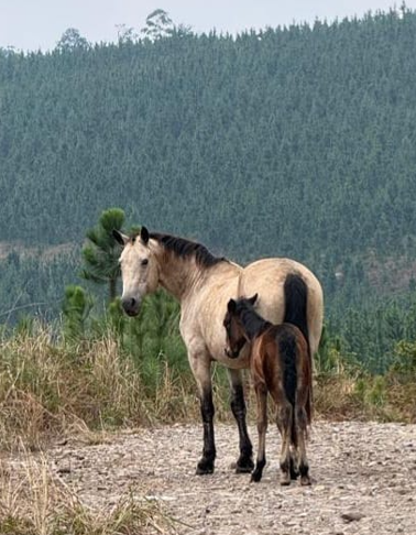
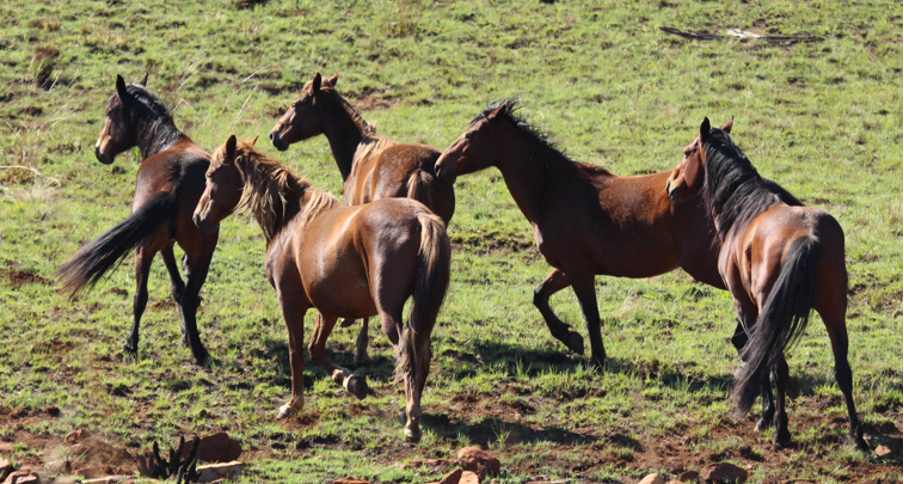
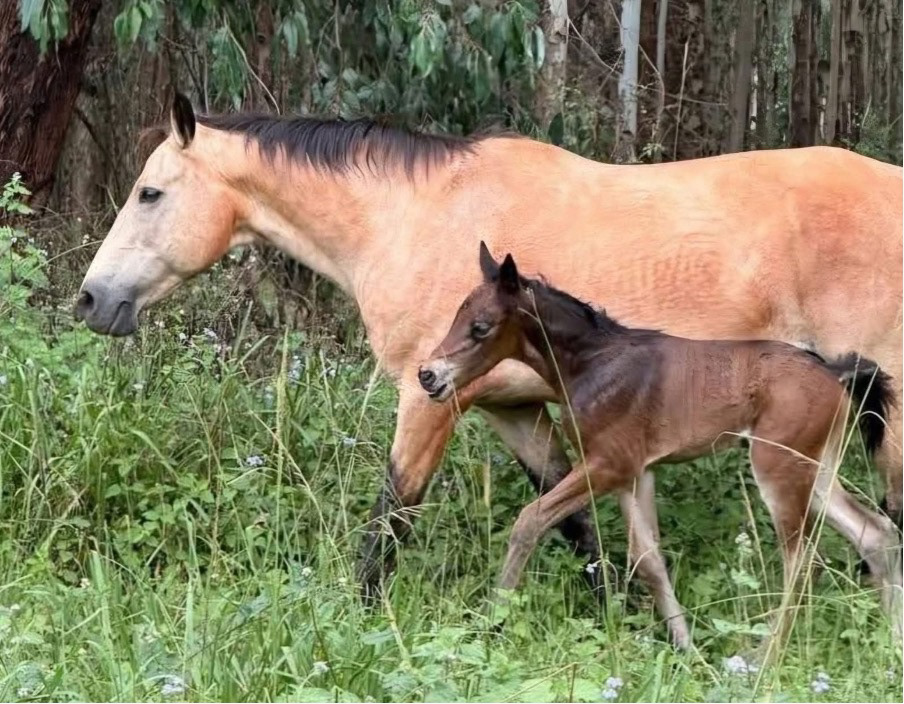
The Kaapschehoop wild horses are a unique phenomenon due to them not being owned by anyone and roams across large areas that are not fenced.
There are various theories surrounding their origins. Some believe they are descendants of horses abandoned by British forces during the Anglo-Boer War (1899 – 1902). Others believe they were left behind by fortune seekers during the Kaapschehoop gold rush, when mining camps faded, and settlers moved on. Some of the horses are also believed to have been left on the escarpment by individuals over the years, and that these horses joined the wild horses. Be that as it may, they stay shrouded in mystery.
WHY DO WE NEED HELP TO SAVE THEM?
The Kaapschehoop Conservancy (KHC) was established in 2022 with the main goal to preserve the historical village and support conservation in the surrounding area. The Conservation leg has grown exponentially due to the security efforts taken to support looking after the free roaming wild horses (after the terrible poaching incident in Sept 2025 where we lost 4 horses), the various other wildlife as well as the environment they move through.
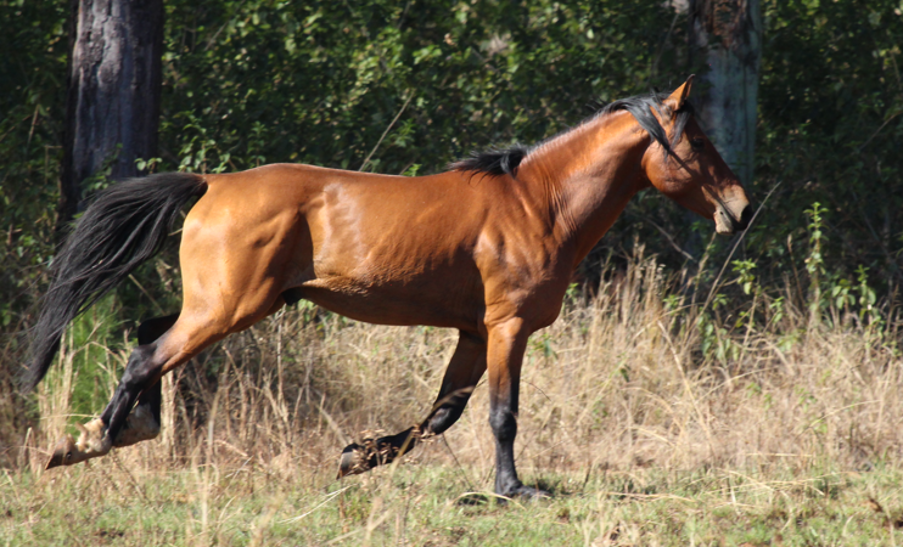
The wild horses’ numbers have declined massively over the last 6 years due to African horse sickness, road accidents, veldfires and now POACHING.
There are only 30 horses left compared to around 180 in 2020.
With our increased efforts to look after the horses we uncovered how much poaching of other wildlife is taking place as well. We also uncovered that illegal mining was increasingly entering our surrounding area and increasing.
Can we save them with the current low numbers? YES, but the growth in their numbers will be very slow and needs time over many years in an environment of protection.
WE NEED TO BUY TIME!
WHAT CONSERVATION EFFORTS HAVE BEEN PROVIDED BY THE CONSERVANCY?
SECURITY
The Kaapschehoop Conservancy has provided the following security measures;
The KHC Mountain Rangers (14 volunteers) are helping to monitor the wild horses and wildlife over a very large area (more than 13 000 hectares and around 600km of dirt roads).
We have brought in trail cameras that are being monitored in the surrounding area.
We have partnered with SABA (South African Bush-Warrior Association) that has been conducting monthly snaring patrols since Oct 2025.
We have partnered with Afrique du Sud K9 that has provided anti-poaching units and illegal mining patrols since March 2026.
WELLNESS:
Over the years, some of the residents of Kaapschehoop have taken it upon themselves, from a volunteering perspective, to look out for the wild horses as far as possible regarding their wellness. The principle has always been that only when human actions result in injury or sickness will we try to assist an injured or sick animal and bring in veterinary services where necessary. Our motto is “keep our horses wild”. We have partnered with Dr Donnie from Van Wijk street Vet. He has been working with the wild horses for many years.
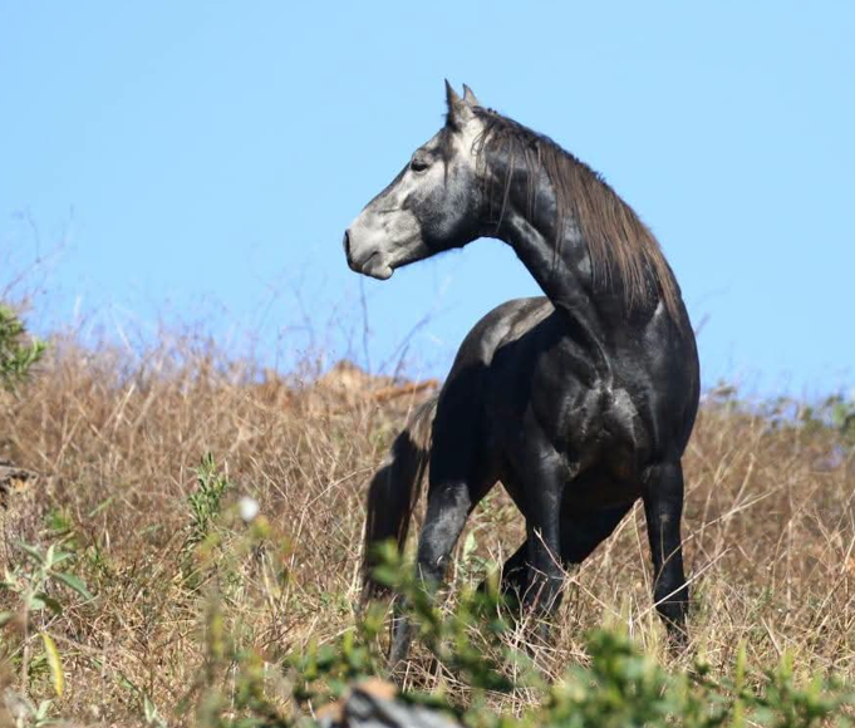
We are experiencing higher than usual veterinary costs due to the low numbers of mares resulting in more fighting between the stallions and subsequent injuries.
DONATIONS/SPONSORSHIPS WILL CONTINUE TO SUPPORT THE FOLLOWING:
Anti-poaching and illegal mining K9 units: These are formal anti-poaching units (APU) patrolling with anti-poaching dogs.
De-snaring patrols: These are patrols specifically target at finding snares and disposing off them. We have noticed that snaring activity do increase in the areas where the illegal miners increase. We need to provide our horses and wildlife a fighting chance.
Sponsored 4 x 4 vehicle/s: It will help tremendously in covering the horse roaming areas, and especially more difficult to reach areas. It will support getting the APUs and de-snaring teams to remote locations. Plus, not all the Mountain Rangers have 4 x 4 vehicles which limits the areas they can patrol, especially in the wet summers.
Security administration personnel and trail camera monitoring support: With the KHC committee and sub-committees all being volunteers, it would help tremendously if 2 x people can be appointed to support monitoring trail cameras, capture activity and provide reports as needed.
Security trail cameras: We have various trail cameras that are being monitored. We need more cameras to be back ups for those cameras out there. The camera batteries occasionally need time to charge and they do unfortunately get stolen as well.
Veterinary services: To support sick or injured wild horses or any other wildlife that might need help due to human actions.
HOW CAN YOU HELP?
Our surrounding community, businesses and private donors have stepped up in many ways for our horses since the last poaching incident in Sept 2025, and we thank them from the bottom of our hearts.
However, all the efforts towards saving our horses and buying time for their future will require continuous funding to ensure an environment of protection for the growth in our horse population.
If you would like to donate towards saving our wild horses, you can do so as follow:
Kaapschehoop Conservancy
Absa Bank
Savings Account: 912 061 9813
Branch Code: 632 005
Reference: Save our horses
Kaaschehoop village is a registered Conservancy and managed by the Kaapschehoop Conservancy (KHC) committee. We are also now tax exempt (a registered PBO at SARS) and can provide Section 18A certificates for donors.
The initiatives are managed by the KHC Committee. All donations will be formally managed as part of the Kaapschehoop Conservancy financials (Audited by Frontier Accounting services).
WHAT BENEFITS DO WE ALL GET BY SAVING THE WILD HORSES?
You will help save these wild horses that have been part of the rich history of the area. Protecting a national asset. And protecting them for future generations.
Through the security measures for the wild horses, you will also help conserve all the other wildlife and fauna and flora on the eastern escarpment. Conservation in this area is severely lacking.
We have a multitude of indigenous animals in this area (example red and grey duikers, grey rhebok, bushbuck, klipspringers, kudu, bushpig, civets, servals, African wild cats, caracal, jackal, porcupines, dassies, mongooses, baboons, vervet monkeys, and many more. Leopard spoor has also been seen…).
The Kaapschehoop fynbos and rock aloes in the surrounding areas are also under threat from illegal mining activities as well as poaching (yes, our plants get stolen as well…).
By conserving the area, it supports tourism and visitors to the area, which also supports guest houses, restaurants, and tourism activities in Kaapschehoop and surrounding areas, sustaining a multitude of jobs (in a country where job shedding has reached dire levels).
We look forward to your participation in a project close to all our hearts.
Help us keep our horses wild
Please send us an email to kaapschehoopvillage@gmail.com if you would like more information.
You can also find us on our Facebook page (Kaapschehoop Conservancy).